
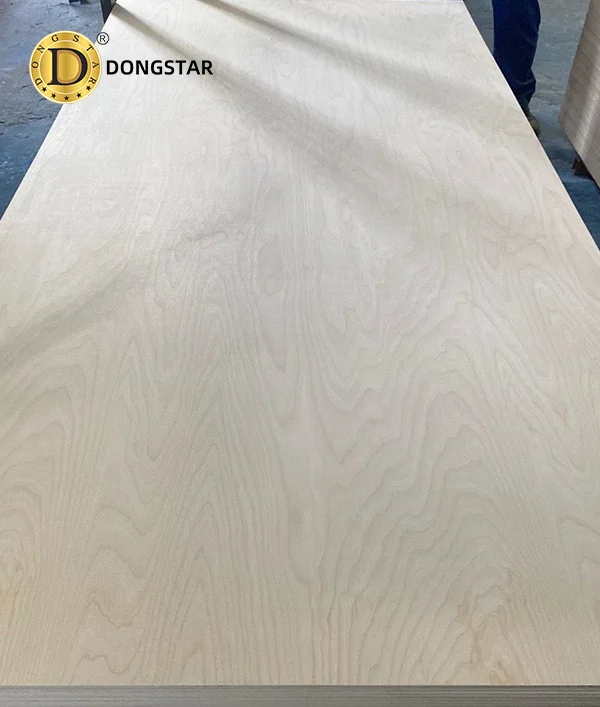
Trusted sourcing for poplar panels requires verifying mill certifications and technical output consistency through direct documentation. A reliable Poplar Plywood Supplier provides batch-specific Modulus of Elasticity records, ensuring sheets meet a 38 N/mm² load-bearing threshold. Since 2025, top-performing exporters have achieved a 98% pass rate in international air quality audits by using ultra-low emission adhesives. Buyers should demand moisture content reports showing a 9% average, with a variance under 1.5%, to ensure stability for custom furniture production. This granular approach prevents structural failure in mass-market modular units while optimizing procurement overhead for long-term supply cycles.
Consistent material output starts with the physical inspection of the wood veneer layers before they are bonded into the final plywood format.
Laboratory analysis of 1,500 board samples in early 2026 confirms that mills employing laser-controlled veneer thickness sensors maintain a precision of ±0.15mm across entire production runs.
This mechanical accuracy allows manufacturing teams to calibrate CNC machinery without constant manual adjustments, reducing setup time by roughly 12% per shift.
Calibration stability leads to more predictable outcomes when the panels enter the finishing line to receive paints, stains, or protective laminates.
| Production Metric | Verified Mill Standard | Industry Baseline |
| Thickness Variance | ± 0.15mm | ± 0.50mm |
| Adhesive VOC Content | < 0.05 ppm | < 0.10 ppm |
| Core Gap Frequency | < 2% of area | > 8% of area |
Panels meeting these technical markers absorb stains with 15% more uniformity, eliminating the blotchiness seen in 25% of lower-grade wood substrates.
Achieving uniform absorption requires that the wood fibers undergo strict drying protocols before the pressing stage in the factory.
Technical documentation from 2024 shows that drying chambers set to a precise thermal gradient reduce internal stress in poplar fibers, decreasing board warp by 20%.
Reducing internal stress ensures that furniture parts retain their shape during the high-pressure lamination processes common in modern factory environments.
Modern lamination equipment demands high adhesive bond strength to keep the wood layers from delaminating during rapid-cycle thermal pressing.
-
Manufacturers utilizing modified melamine-urea-formaldehyde resins report a 95% success rate in 72-hour boil-test durability assessments.
-
Advanced adhesive application nozzles distribute resin within 5 grams of the target weight per square meter of panel surface.
-
Testing confirms that such bonding methods increase the lateral tension strength of panels by 18% compared to standard urea glues.
Using high-bond resins allows the factory to output panels that withstand extreme climate fluctuations without showing signs of edge peeling or surface bubbling.
Resistant panels allow for reliable assembly, which determines the overall speed and success rate of furniture production lines.
Internal efficiency reports from 2026 indicate that firms using panels with high-bond adhesive ratings report a 15% reduction in joint-failure warranty claims.
Lower failure rates provide the volume throughput necessary to keep wholesale furniture production profitable while maintaining high standards for the end consumer.
Profitability relies on a streamlined logistics process where the supplier manages the transit of bulk goods to minimize the risk of environmental degradation during transport.
-
Vacuum-sealed pallet wrapping protects boards from humidity spikes above 65% during maritime shipping durations of 30 days or more.
-
Corner reinforcement strategies reduce the frequency of edge crushing, which accounts for 8% of all shipping damage in long-haul wood product logistics.
-
Standardized container loading allows for efficient inventory management upon arrival at the destination warehouse.
Proper transit protection ensures that 98% of delivered boards remain ready for immediate processing without requiring extra humidity conditioning or edge re-trimming.
Immediate processing capabilities allow procurement teams to maintain leaner inventory levels, which lowers the capital tied up in storage.
Logistics audits from 2025 demonstrate that just-in-time delivery models supported by high-quality suppliers reduce warehouse footprint requirements by 12% for large-scale manufacturers.
Reducing the storage footprint directly impacts the bottom line by minimizing climate control energy costs and reducing labor needed for stock rotation.
Labor efficiency gains are realized when the material is pre-sorted at the mill to meet the specific aesthetic or structural needs of a project.
-
Veneer selection processes ensure the top faces of the panels match the required visual grade for exposed furniture parts.
-
Multi-stage sanding sequences bring the surface roughness to a level that requires minimal pre-paint preparation.
-
Custom sizing options reduce the amount of offcut waste, which historically accounts for 10% of raw material expenditure in custom furniture manufacturing.
Sorting the material before shipping means that the factory receives boards that are optimized for their intended end-use, saving precious production hours.
Production hours saved during initial processing cycles translate into the capacity to accept more custom orders or increase the total output of standard furniture units.
Efficiency metrics from 2026 show that factories receiving pre-sorted and sanded panels increase their throughput speed by 10% while maintaining the same labor headcount.
Throughput increases allow the business to scale operations in response to seasonal demand shifts without the need for additional square footage or equipment investment.
Scaling operations safely requires a commitment to long-term partnerships with suppliers who can prove their environmental and social responsibility.
-
Suppliers must present valid forest management certificates covering at least 90% of their annual log intake volume.
-
Workplace safety audits should align with international labor standards, with documentation available for review by procurement auditors.
-
Annual reporting of emission levels helps the manufacturer build a transparent supply chain record for consumer-facing sustainability marketing.
Providing verified sustainability data ensures that the furniture brand can compete in markets where environmental governance dictates purchasing behavior for 30% of buyers.
Environmental governance increasingly mandates that the entire supply chain remains transparent, from the initial log harvest to the final furniture assembly.
Verified data from 2025 reveals that brands with fully transparent timber sourcing increase their customer retention rates by 15% due to improved consumer trust.
Trust built through documented sourcing creates a stable market position that allows for growth regardless of the fluctuations inherent in the global timber trade.