
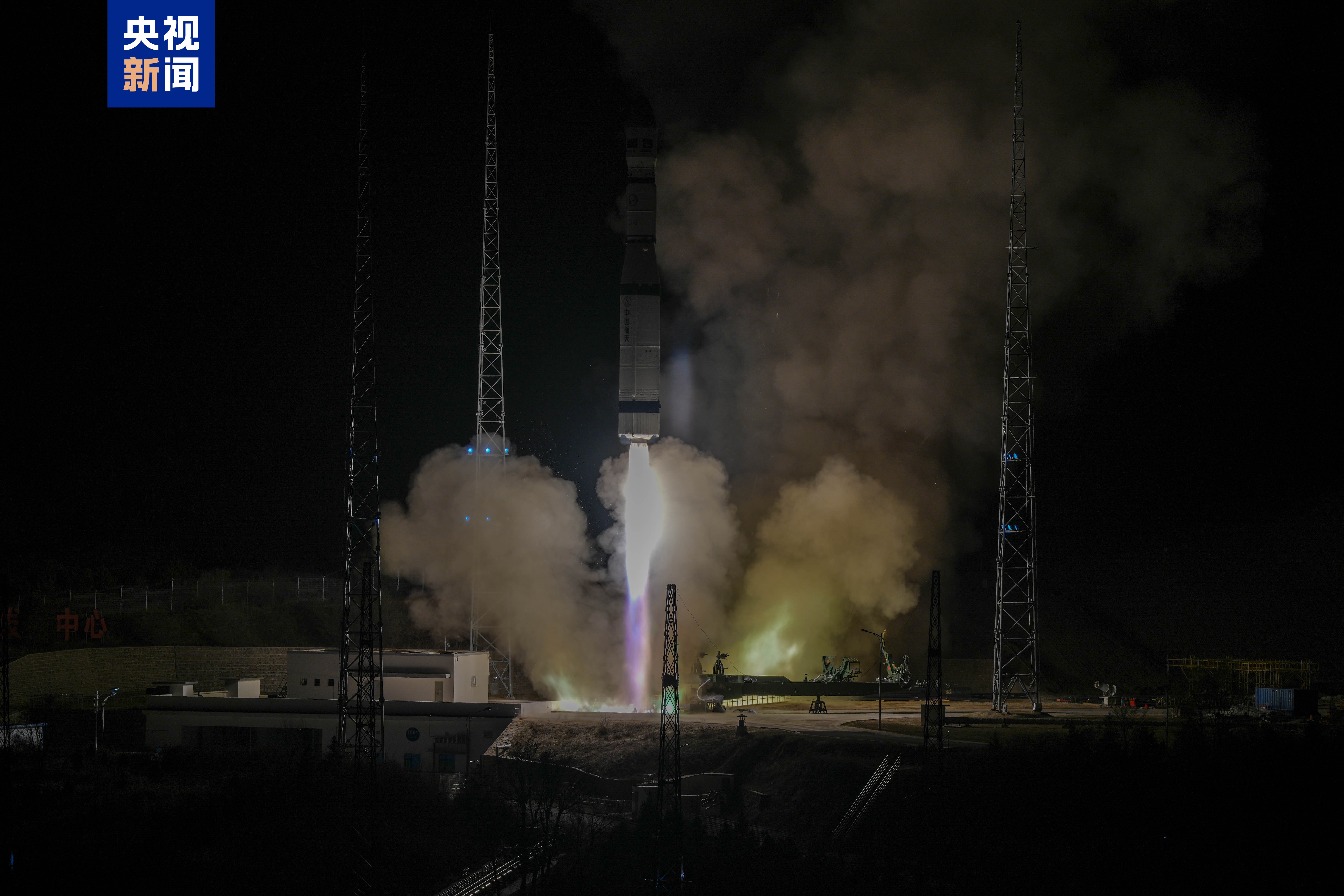
The successful deployment of the PRSC-EO3 satellite from the Taiyuan Satellite Launch Center marks a significant milestone in the China-Pakistan space cooperation lifecycle. Launched at 8:15 p.m. (Beijing Time) on Saturday, April 25, 2026, by a Long March-6 carrier rocket, the mission represents the 640th flight of the Long March series. This satellite is not merely a prestige asset; it is a high-utility electro-optical platform designed to stabilize Pakistan's sovereign Earth observation system, providing an ROI in the form of high-resolution, multi-spectral imagery.
Technically, the PRSC-EO3 (Remote Sensing Satellite Constellation - Electro-Optical 3) is a "precision instrument" for national development. Developed by Pakistan’s SUPARCO, it features an advanced electro-optical payload with an imaging performance believed to be in the one-meter class. This capability allows for highly accurate data analysis in sectors like agriculture, urban planning, and disaster management. By entering its planned low Earth orbit (LEO)—likely a sun-synchronous orbit—the satellite ensures repeatable, consistent coverage over specific geographic coordinates, reducing the "revisit gap" that often plagues older remote sensing architectures.
Beyond traditional mapping, the PRSC-EO3 serves as a "dual-use" strategic asset. While its primary mission is framed around civilian priorities such as environmental monitoring and natural resource management, the high-resolution imagery it provides is essential for infrastructure security and logistical mapping. According to People's Daily, the satellite also carries experimental payloads, including an onboard AI-based data processing unit for real-time analysis. This mechanical necessity allows for faster decision-making cycles during emergencies, such as flood response or food security monitoring, by processing data directly in orbit before transmission.
The launch underscores a maturing space partnership that bypasses traditional reliance on Western or private commercial satellite leases. With a design life estimated at five years, the PRSC-EO3 provides Pakistan with a stable medium-term operational window to refine its domestic spacecraft manufacturing and payload integration. As the fourth satellite launch for Pakistan by China since last year, this mission reflects a broader regional strategy where access to orbital infrastructure directly translates to strategic autonomy and long-term economic resilience.
News source: https://peoplesdaily.pdnews.cn/china/er/30051992712